


 |
|
To be honest, I was initially a little sceptical about the stability of the upper levels if I were to position my devices too far off-centre in relation to their respective centre of gravity - i.e. too far forwards or backwards on the level - because the spikes are relatively close together on each side. But the spikes can really be tightened and locked very firmly, nothing wobbles. And of course, no typical tube amplifier with signal and mains transformers positioned far back on the chassis belongs at the rear edge on one of the upper levels. No, heavy whopping amplifiers belong on the higher load-bearing bottom level anyway. As a reminder: The top levels can bear up to 25 kilograms of weight (in fact, they still have a calculated reserve of around 20 per cent) and it goes without saying that devices positioned on them should be positioned as centrally as possible.
However, the real secret of this rack lies in the resonance tuning of the individual assemblies. Thanks to this "balancing", there are no identical natural resonances that could potentially overlap and thus amplify each other. Which ultimately brings me back to the question raised at the beginning, whether a hi-fi rack, in other words a piece of furniture, can be granted component status, or not. In a very invigorating telephone conversation with Luis Fernandes, the founder, owner and developer of Finite Elemente, I learnt a lot more detailed information, some of it confidential, and was given an explanation of the design context. When I consider the engineering effort that has gone into this, together with the fact that an environment that is as free of interference as possible is an absolute prerequisite for sensitive hi-fi components to be able to realize their full sonic potential, I come to the conclusion that a hi-fi rack like this really is a hi-fi component in its own right. I was all the more curious to see if I could notice a significant difference to my own rack made by the British company Hi-Fi Racks Ltd.

I quickly realized that sensitive tube amplifiers in particular gained significantly as soon as I placed them on the Pagode Signature rack. Sensitive tubes in particular tend to exhibit intense behaviour of their own when they are over-excited by impact or ambient sound. Even buzzing, chirping or chirring antique tubes, which I had previously believed to have a defect in their internal construction, became at least partially usable again. This is absolutely amazing! Noise artefacts were generally reduced, making the sound clearer and cleaner overall. Luis Fernandes described this phenomenon as "the noise floor gets reduced", which I found very apt. It all happened on a very subtle level that is difficult to pinpoint. Rather, it seemed like a curtain was being pulled aside, like a veil being torn away to reveal a slightly clearer view. Or like a clearing shroud of fog. The same applied to turntables, which benefit even more from the resonance-free - or rather: resonance-optimized - environment. Due to a lack of suitable equipment and, above all, a lack of experience with such devices, I am unable to answer the question of whether digital components would also benefit in a similar way from being placed on this rack.


-
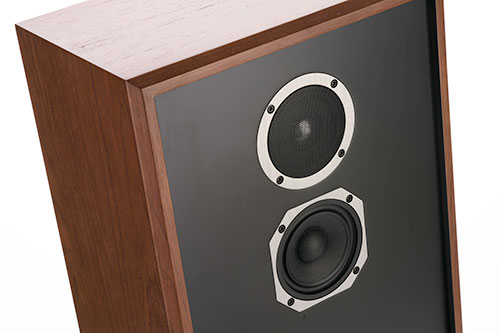
KLH Audio Model Four
Endlich steht mal etwas ganz anderes in meinem Hörraum. Der Lautsprecher des traditionsreichen amerikanischen Herstellers KLH entspricht einem Design von vor mehr als 50 Jahren, wie man es auch heutzutage bei Edelmarken wie Harbeth oder Audio Note findet. Bislang hatte ich nicht das Vergnügen, einen solchen Lautsprecher im Hörraum zu erleben. Neben dem Design mit breiter Schallwand und geringer Bautiefe macht der Paarpreis von knapp 2000 Euro die KLH Model Four hochgradig interessant. Auf zum…19.10.2026 -
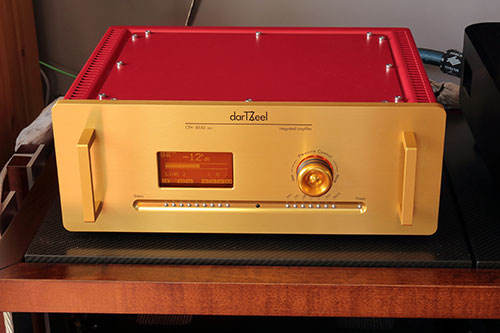

darTZeel Audio CTH-8550 Mk II
darTZeel ist ein Schweizer Unternehmen, das 2001 in Genf von Hervé Delétraz gegründet wurde. Der Name ist ein Anagramm des Nachnamens Delétraz. Die Arbeit an den ersten Geräten begann bereits 1984 im Rahmen einer Diplomarbeit, und nach 18 Jahren Forschung wurde 2002 der Leistungsverstärker NHB-108 offiziell vorgestellt. Es gibt Marken, auf die man viele Jahre warten muss, aber man wartet trotzdem weiter. So war es für mich bei der Marke darTZeel. Zufällig traf ich ihren…13.10.2026 -
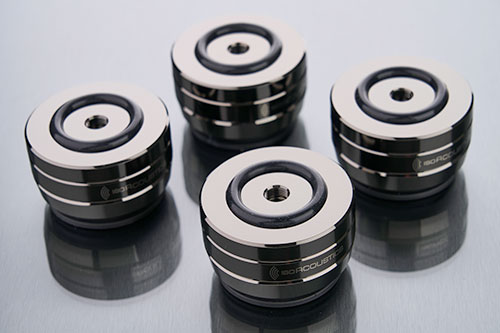
IsoAcoustics GAIA Neo I
Erinnern Sie sich noch? Es ist bereits eine ganze Weile her, da haben Hifi-Fans ihre Lautsprecher auf Tennisbälle gestellt, um einen besseren Klang aus ihnen herauszukitzeln. Oder sie haben abenteuerliche Selfmade-Konstruktionen gebastelt, auf denen die vielleicht nicht ganz highendigen Schallwandler platziert wurden. Das ist lange her und in der Zwischenzeit hat sich in Sachen Lautsprecher-Füße einiges getan. Es gibt eine große Zahl an Herstellern, die Basen, Spikes oder Ständer mit unterschiedlichen Konzepten und Materialien produzieren,…09.10.2026 


-
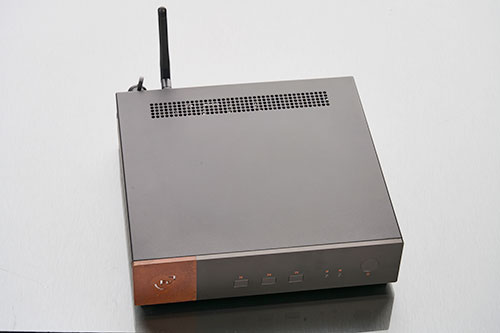
Ferrum BROEN
Auf der High End 2025 ließ man bei Ferrum durchblicken, dass an einem Streamer gearbeitet wird. Die Ferrum Streaming Control Technology, mit der die Musikwiedergabe mittels der Fernbedienung Ferrums DAC WANDLA steuerbar ist, war bereits eine Vorbereitung auf den Streamer und das Schaffen eines gesamten Ferrum-Ökosystems. Im Oktober 2025, wenige Monate nach der High End letzten Jahres waren auf der Audio Video Show in Warschau dann bereits erste BROEN Vorserienmodelle in Betrieb. Auf der diesjährige…06.10.2026 -
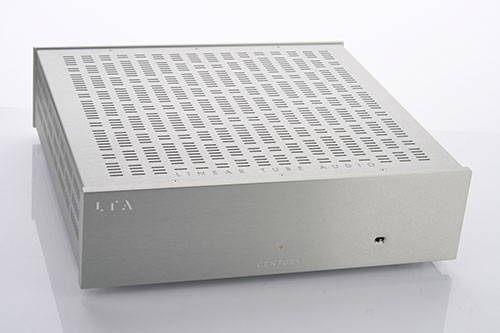
Linear Tube Audio Century
Century heißen die Röhren-Mono-Endverstärker von Linear Tube Audio, die ohne Ausgangsübertrager auskommen und sich dennoch grundlegend von anderen OTL-Konzepten unterscheiden. Wir haben uns intensiv damit beschäftigt, was die patentierte ZOTL-Technologie des Entwicklers so besonders macht und wie sie sich klanglich auswirkt. Für diesen Test haben Dirk Sommer und ich uns eine Arbeitsteilung vorgenommen, bei der ich (Carsten Bussler) mich auf die Technik der Century-Monos sowie die Hintergründe zu Linear Tube Audio und die Zusammenarbeit mit…29.09.2026 -
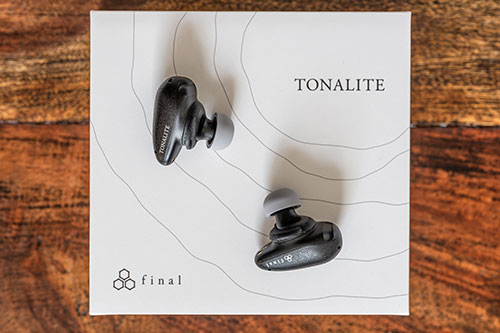
Final Tonalite
Finals Tonalite ist nicht nur ein neuer In-Ear, sondern macht gleichzeitig Finals Timbreanpassung jedem Nutzer mittels einer App zugänglich. Seit der noch etwas kryptischen Ankündigung dieser Technologie auf der High End 2022 habe ich Ihnen über den Entwicklungsprozess berichtet. Das fertige Produkt halte ich persönlich für einen Meilenstein. Tonalite ist eine grundlegende Neuentwicklung mit neuem Formfaktor und neuer Technik. Die Tonalite In-Ears verfügen über eine eher ovale Form, in der die gesamte Elektronik untergebracht ist.…25.09.2026
© 2026 | HIFISTATEMENT | netmagazine | Alle Rechte vorbehalten | Impressum | Datenschutz


Einige Hifistatement-Autoren benutzen
Qobuz Sublime+ Abonnements.

Einige Hifistatement-Autoren besitzen
eine roon Mitgliedschaft.

Einige Hifistatement-Autoren besitzen
die JPLAY hi-fi app.

Einige Hifistatement-Autoren besitzen
den Audirvana Plus 3 Music Player.