


 |
|After establishing initial contact by phone, I met the developer during the fair in Warsaw, where he demonstrated the Pirol in a rather small hotel room. While the speakers saw their woofers radiating to the side walls of the room and the walls standing too close anyway, the lows in the end sounded a bit too euphonic for my taste, making me doubt that the Pirol would ever feel comfortable in my listening room. And when I asked for their physical weight I felt that a review was beyond any means. But despite my objections, the developer remained thoroughly relaxed and explained to me that he was in possession of an electric stair lift for completing such transport activities, and also readily admitted that the level of the bass had been set a bit too lavishly, in order to still make enough impact even when giving the system only that cursory listening very common at trade fairs. Less than five minutes and some typing on trackpad and keyboard of his laptop computer later, the Pirol proved that, despite its opulent membrane surface and its placement close to the walls, it could perform very accurate, controlled and melodious in the low frequency ranges even in a rather small room: I therefore invited Michael Plessmann and his Pirol to my listening room.

But when he arrived at my front door with his companion, the aforementioned electric stair lift and two huge flightcases, I wasn't so sure anymore whether the invitation had really been a good idea. But the closely-knit duo – or trio, if one may include the stair lift – managed the transport up to the third floor, though bridging the first two by an elevator, not particularly in style, but with routine and skill. Now that these whoppers arrived in my listening room, their active modules get their power from two Audioquest Tornado, while the two preamp outputs of the fantastic Audio Exklusiv R7 supply both the Einstein power amplifier and the bass electronics of the Pirol.

The moment, or better, minutes of truth are approaching: In the case of previously unknown components or components that have only been heard under trade fair conditions, the first few minutes decide whether testing them is an obligation or a pleasure. Regardless of conscientious fine-tuning, a familiar test track will quickly reveal if a transducer fits the room as well as your own preferences. After just a few tones the Pirol has won me over: There are no tonal anomalies and despite the pleasantly intense bass foundation the speakers play very lively and captivating. You are well aware of the phenomenon: If a speaker indulges you with a lot of low frequency energy, it often seems a bit sluggish and rhythmically less exciting. Not in the case of the Pirol: It performs extremely enthusiastic and doesn’t leave the listener indifferent. By now it's clear to me: Michael Plessmann must have thought through some matters extremely well. But that doesn't necessarily mean, that the Pirol wouldn't positively respond to some fine-tuning or even more profound modifications. But more on that later. At least I am sure that the further occupation with the Soundspace Systems will pan out to be the more sensual part of my work.


-
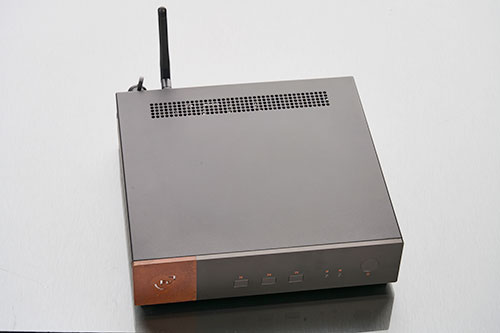
Ferrum BROEN
Auf der High End 2025 ließ man bei Ferrum durchblicken, dass an einem Streamer gearbeitet wird. Die Ferrum Streaming Control Technology, mit der die Musikwiedergabe mittels der Fernbedienung Ferrums DAC WANDLA steuerbar ist, war bereits eine Vorbereitung auf den Streamer und das Schaffen eines gesamten Ferrum-Ökosystems. Im Oktober 2025, wenige Monate nach der High End letzten Jahres waren auf der Audio Video Show in Warschau dann bereits erste BROEN Vorserienmodelle in Betrieb. Auf der diesjährige…06.10.2026 -
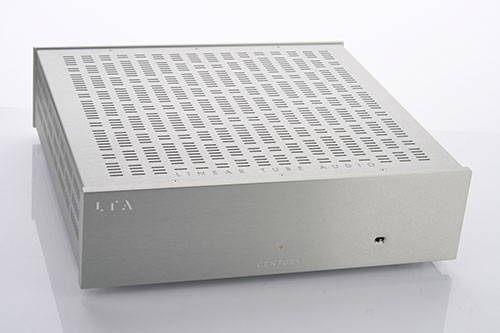
Linear Tube Audio Century
Century heißen die Röhren-Mono-Endverstärker von Linear Tube Audio, die ohne Ausgangsübertrager auskommen und sich dennoch grundlegend von anderen OTL-Konzepten unterscheiden. Wir haben uns intensiv damit beschäftigt, was die patentierte ZOTL-Technologie des Entwicklers so besonders macht und wie sie sich klanglich auswirkt. Für diesen Test haben Dirk Sommer und ich uns eine Arbeitsteilung vorgenommen, bei der ich (Carsten Bussler) mich auf die Technik der Century-Monos sowie die Hintergründe zu Linear Tube Audio und die Zusammenarbeit mit…29.09.2026 -
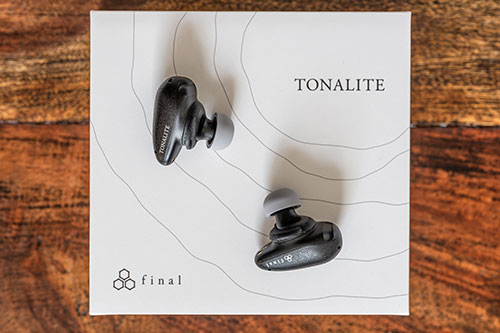
Final Tonalite
Finals Tonalite ist nicht nur ein neuer In-Ear, sondern macht gleichzeitig Finals Timbreanpassung jedem Nutzer mittels einer App zugänglich. Seit der noch etwas kryptischen Ankündigung dieser Technologie auf der High End 2022 habe ich Ihnen über den Entwicklungsprozess berichtet. Das fertige Produkt halte ich persönlich für einen Meilenstein. Tonalite ist eine grundlegende Neuentwicklung mit neuem Formfaktor und neuer Technik. Die Tonalite In-Ears verfügen über eine eher ovale Form, in der die gesamte Elektronik untergebracht ist.…25.09.2026 


-
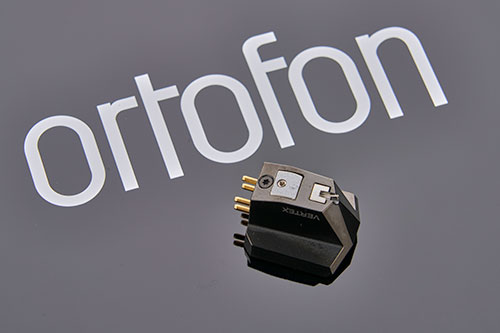
Ortofon MC Vertex
Die bisherigen Topmodelle von Ortofon, das Anna, das Anna Diamond und das Diamond, ähnelten einander auch optisch stark. Das Vertex macht schon durch sein Erscheinungsbild klar, dass es anders ist. Es ist der erste Tonabnehmer mit einem Diamanten mit Vertex-Schliff. Soweit mir bekannt, ist das der erste neue Nadelschliff seit rund 40 Jahren. Aber das ist nicht die einzige Veränderung gegenüber dem MC Diamond: Der Generator des Vertex besitzt einen deutlich höheren Innenwiderstand, die Nadelnachgiebigkeit…15.09.2026 -
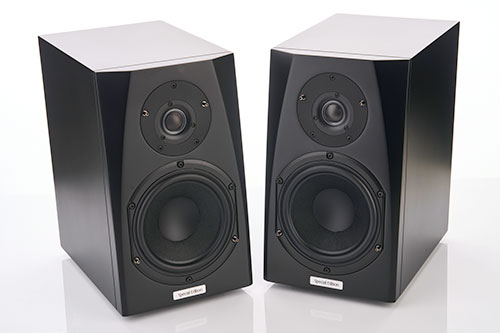
Phonar Veritas M4.2 SE
Es hat mir bislang stets Vergnügen bereitet, mich mit Phonar Lautsprechern zu beschäftigen. Nach einem Test kaufte ich die Veritas 9.2 SE und genieße seitdem ihre Musikalität. Phonar überzeugte immer wieder mit einem außergewöhnlich attraktiven Preis-Klang-Verhältnis. Bestätigt die neue, kompakte Phonar Veritas M4.2 SE diese Erfahrungen? Mein eindrucksvollstes Phonar-Erlebnis hatte ich vor zwei Jahren mit der Standbox Veritas p4.2 Next, die aktuell für einen Paarpreis von 2400 Euro auf der Phonar-Website zu sehen ist. Genau…08.09.2026 -
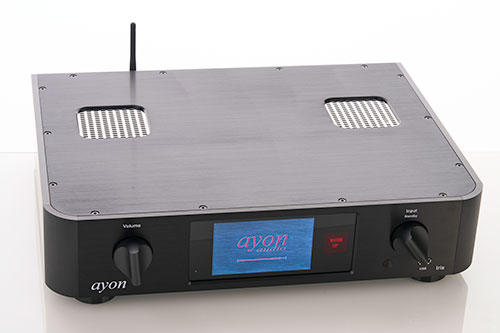
Ayon Iris Signature Streamer
Auf der High End Vienna haben Dirk Sommer und ich den Ayon Iris erstmals entdeckt – nun steht der außergewöhnliche Streaming-Player bei uns bereits zum Test. So frisch ist der Iris, dass selbst die Roon-Zertifizierung zum Testzeitpunkt noch läuft. Brandneu, doch der Iris kommt keineswegs aus dem Nichts: Wer die Entwicklung der digitalen Ayon-Komponenten verfolgt hat, erkennt eine kontinuierliche Beschäftigung mit dem Thema Streaming. Auch wir konnten diesen Weg begleiten – nach dem S3 und…01.09.2026
© 2026 | HIFISTATEMENT | netmagazine | Alle Rechte vorbehalten | Impressum | Datenschutz


Einige Hifistatement-Autoren benutzen
Qobuz Sublime+ Abonnements.

Einige Hifistatement-Autoren besitzen
eine roon Mitgliedschaft.

Einige Hifistatement-Autoren besitzen
die JPLAY hi-fi app.

Einige Hifistatement-Autoren besitzen
den Audirvana Plus 3 Music Player.