


 |
|The Divin Comtesse had been introduced by Oliver Goebel at last year's High End show: The two speakers, which are petite by Goebel High End standards, filled the large room impressively with sound in conjunction with a subwoofer. Series production has now taken off, so a pair also found its way into my listening room – but it had to wave farewell soon.
The Comtesse is the smallest model in the Divin series and thus marks also the entry point to the entire loudspeaker portfolio from Goebel High End. The company owner explained that his distributors in non-European countries had wanted a less bulky loudspeaker, since some of the customers there had the audiophile demands, as well as the financial means, but not the space for larger sound transducers. Therefore, the main focus in the development of the Comtesse was to size down a large part of the sonic capabilities of the other representatives of the Divin line into a smaller cabinet volume. The crossover of the Comtesse is just as elaborately constructed as that of the next model up, the Marquis. The 8-inch long-throw woofer is similarly costly as the 12-inch chassis of this next larger model, while the midrange driver and the tweeter are identical and the savings due to the slightly smaller cabinet are almost negligible. This puts the Comtesse in the position to offer an unusually large amount of Goebel High End technology at a comparatively moderate price.

The midrange driver of the Divin Comtesse is an 8-inch chassis specially developed for the Bavarian high-end manufactory, into which, according to the product brochure, the patented Goebel® bending wave technology has been implemented. This is based on the principles of sound generation as known from musical instruments and is the result of over 15 years of development work, invested to achieve the most natural sound possible. The high-frequency spectrum is reproduced by an AMT chassis – or Air Motion Transformer – to which a waveguide milled from a solid block of aluminum has been adapted. The specific curve of this waveguide ensures that all drivers are flawlessly combined to create a homogeneous and natural sonic image. The low-frequencies are handled by a Goebel® 8-inch long-throw woofer, which has been designed to achieve perfectly homogeneous sound dispersion and equally homogeneous stimulation of room modes. This driver, specially manufactured for Goebel, was placed on the front baffle constructed according to the concept of “Constraint Layer Damping”, in which layers of different materials damp each other, in such a way that an absolutely smooth transition from the 8-inch midrange driver to the long-throw woofer’s low frequency band is achieved. The use of multi-layer, tropical-proof materials in the enclosure is intended to guarantee the ideal stiffness-damping behaviour ratio, and the chosen, purely functional form is said to eliminate any flexion, resonance or energy-storing effect.

The top-model of the Divin series, the Majestic, is delivered in six flight cases, as I once learned during a visit to the company headquarters. Even with Goebel High End's most affordable loudspeaker to date, the Comtesse, a flight case made in Germany is included in the scope of delivery. Oliver Goebel kindly brought an electric stair climber along to aid the delivery, so that the two speakers could be transported to the listening room without being carried by human hands. After they had found their approximate position in the tried-and-tested places and had been connected to Einstein's The Poweramp using Goebel speaker cables, I entrusted Oliver Goebel to the listening room with an iPad and access to the Qobuz streaming service. He simply needed a bit of peace and concentration to play his test tracks, as well as plenty of time to set up his speakers enabling them to develop their full potential. Well, another reason for my temporary retreat could, of course, be that there was a series of vocal tracks among his test files coming along...


-
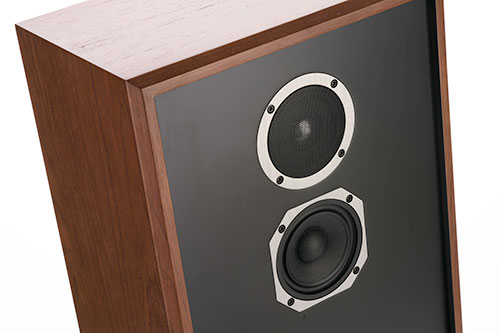
KLH Audio Model Four
Endlich steht mal etwas ganz anderes in meinem Hörraum. Der Lautsprecher des traditionsreichen amerikanischen Herstellers KLH entspricht einem Design von vor mehr als 50 Jahren, wie man es auch heutzutage bei Edelmarken wie Harbeth oder Audio Note findet. Bislang hatte ich nicht das Vergnügen, einen solchen Lautsprecher im Hörraum zu erleben. Neben dem Design mit breiter Schallwand und geringer Bautiefe macht der Paarpreis von knapp 2000 Euro die KLH Model Four hochgradig interessant. Auf zum…19.10.2026 -
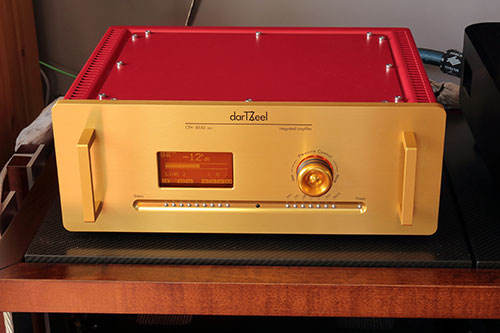

darTZeel Audio CTH-8550 Mk II
darTZeel ist ein Schweizer Unternehmen, das 2001 in Genf von Hervé Delétraz gegründet wurde. Der Name ist ein Anagramm des Nachnamens Delétraz. Die Arbeit an den ersten Geräten begann bereits 1984 im Rahmen einer Diplomarbeit, und nach 18 Jahren Forschung wurde 2002 der Leistungsverstärker NHB-108 offiziell vorgestellt. Es gibt Marken, auf die man viele Jahre warten muss, aber man wartet trotzdem weiter. So war es für mich bei der Marke darTZeel. Zufällig traf ich ihren…13.10.2026 -
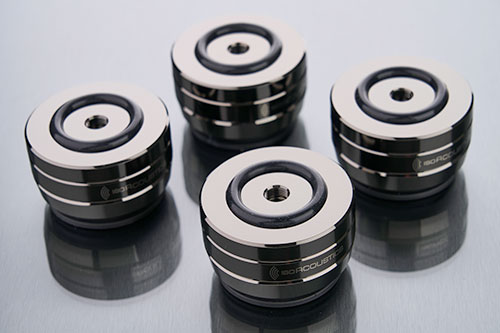
IsoAcoustics GAIA Neo I
Erinnern Sie sich noch? Es ist bereits eine ganze Weile her, da haben Hifi-Fans ihre Lautsprecher auf Tennisbälle gestellt, um einen besseren Klang aus ihnen herauszukitzeln. Oder sie haben abenteuerliche Selfmade-Konstruktionen gebastelt, auf denen die vielleicht nicht ganz highendigen Schallwandler platziert wurden. Das ist lange her und in der Zwischenzeit hat sich in Sachen Lautsprecher-Füße einiges getan. Es gibt eine große Zahl an Herstellern, die Basen, Spikes oder Ständer mit unterschiedlichen Konzepten und Materialien produzieren,…09.10.2026 


-
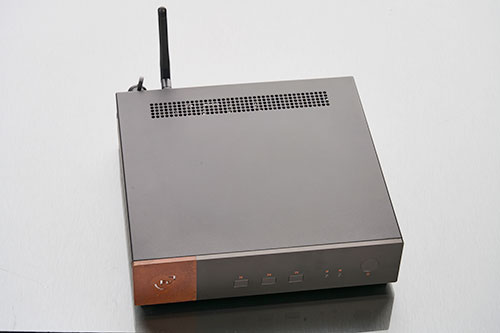
Ferrum BROEN
Auf der High End 2025 ließ man bei Ferrum durchblicken, dass an einem Streamer gearbeitet wird. Die Ferrum Streaming Control Technology, mit der die Musikwiedergabe mittels der Fernbedienung Ferrums DAC WANDLA steuerbar ist, war bereits eine Vorbereitung auf den Streamer und das Schaffen eines gesamten Ferrum-Ökosystems. Im Oktober 2025, wenige Monate nach der High End letzten Jahres waren auf der Audio Video Show in Warschau dann bereits erste BROEN Vorserienmodelle in Betrieb. Auf der diesjährige…06.10.2026 -
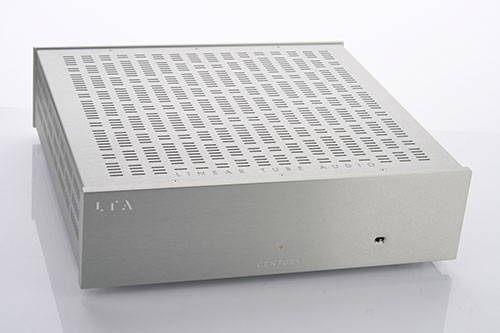
Linear Tube Audio Century
Century heißen die Röhren-Mono-Endverstärker von Linear Tube Audio, die ohne Ausgangsübertrager auskommen und sich dennoch grundlegend von anderen OTL-Konzepten unterscheiden. Wir haben uns intensiv damit beschäftigt, was die patentierte ZOTL-Technologie des Entwicklers so besonders macht und wie sie sich klanglich auswirkt. Für diesen Test haben Dirk Sommer und ich uns eine Arbeitsteilung vorgenommen, bei der ich (Carsten Bussler) mich auf die Technik der Century-Monos sowie die Hintergründe zu Linear Tube Audio und die Zusammenarbeit mit…29.09.2026 -
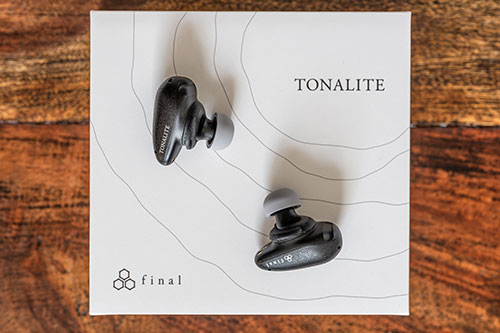
Final Tonalite
Finals Tonalite ist nicht nur ein neuer In-Ear, sondern macht gleichzeitig Finals Timbreanpassung jedem Nutzer mittels einer App zugänglich. Seit der noch etwas kryptischen Ankündigung dieser Technologie auf der High End 2022 habe ich Ihnen über den Entwicklungsprozess berichtet. Das fertige Produkt halte ich persönlich für einen Meilenstein. Tonalite ist eine grundlegende Neuentwicklung mit neuem Formfaktor und neuer Technik. Die Tonalite In-Ears verfügen über eine eher ovale Form, in der die gesamte Elektronik untergebracht ist.…25.09.2026
© 2026 | HIFISTATEMENT | netmagazine | Alle Rechte vorbehalten | Impressum | Datenschutz


Einige Hifistatement-Autoren benutzen
Qobuz Sublime+ Abonnements.

Einige Hifistatement-Autoren besitzen
eine roon Mitgliedschaft.

Einige Hifistatement-Autoren besitzen
die JPLAY hi-fi app.

Einige Hifistatement-Autoren besitzen
den Audirvana Plus 3 Music Player.