


 |
|Still, the rendition of Mark King's voice in the song's choruses is really fun. The arrangement of the song becomes a little less dense and changes from a driving to a more hovering style of playing. The main vocalist's voice is mixed more into the foreground and is a real treat. It sounds at the same time eerily smooth, velvety and pleasant, yet has a tangy, smoky core. How the X3s put this balance into practice is fantastic. Even if the recording is permeated by sibilants, they whether stand out unpleasantly at all, nor do they seem swallowed or overly blurred. The X3's attunement is simply incredibly well done. While fundamental and low-mid frequency ranges tend to prevail here, the ears get at no time overstressed with too much or even cutting highs, no detail is ignored. There is no sense of imprecision or roughness at any point. I cannot even remember the last time I heard a speaker that showed off as relaxed and laid-back, but without ever sounding boring or casual.

The next song on my list is "Tori (bird)" by the Nicolas Parent Trio from the album Tori. Starting quite calmly with a guitar melody, the track is slowly complemented by percussion on the right and double bass on the left channel. This piece also allows the speakers to reveal their more subtle character for the first time. Although the guitar plays only a few notes, every single pluck is accompanied by an incredible energy. The speakers’ tuning very much benefits their impulse response. In addition, the background noise actually seems to turn out particularly quiet. "Noise" in any form is, after all, one of the most treated aspects at Børresen. Probably for this reason, Børresen's "secret coils" developed for noise elimination were also installed in the tweeter path. The detailed striking of the strings is processed in a special way: While other speakers like to add an artificial sheen and sometimes even a certain sharpness here to reveal micro details of the recording in a more apparent way, the Børresen's tweeter renders them quite casually. And that is precisely what makes them so charming. The details are there, just not superficially, but woven into the overall tonality of the instrument. While this intensifies the aforementioned feeling of a musical performance that is really taking place in the listening room, it also leaves enough room for the recording to be able to express itself throughout the mid-range. I think that a slightly warm mid-range accentuation is meant when people widely talk about tonal colours. And the X3 is offering just the right amount here. As curious as I am, I then nevertheless set up a filter for the roon playback section, which deals with the bass boosts conditioned by the room and the speaker placement. The result are even sharper delineated lows than already present anyway. In direct comparison, I can no longer easily ignore my room modes without the filter, but it allows me to better understand how enormously well the huge speakers play in my comparatively small listening room. Yes, the sonic difference when applying the filter is clearly audible, and I personally would prefer setting the filter, but without filter there is no loss of accuracy or detail in the bass. And conversely, with the filter set, there is no change in the characteristics and timbre of the bass range. It remains forceful, impulsive, with that special punch and touch of well-being that I think is typical of Børresen, without ever sounding sludgy or boomy. Again, I don't think many manufacturers get such a kind of tuning done right.

The track "Limit to your Love", taken from James Blake's self-titled album and qualified for burning down almost any voice coil, lets me reach for it again. I especially like to use this song on my own system to demonstrate to skeptics how effectively my filter setting cleans up the low frequencies. In foreign spaces, the linearity of the bass range can usually be evaluated very quickly with this track, while incorrectly tuned cabinets can be unmasked at the same time. Without a filter, the extremely low synthesizer frequencies played in descending order very often turn out differently loud, as one of the frequencies hits a room mode exactly or at least is very close to it. For this track I keep the equalization filter in the signal path to create a better comparability to the familiar listening impression when fuelling my own loudspeakers. This experiment lets the Børresen prove their unshakable authority. And it’s precisely because of these lessons of experience that I explicitly advocate large speakers in small rooms. Although it is regularly argued that a bookshelf speaker is far away from exciting problem frequencies in the first place, being therefore much more suitable than a floor-standing speaker causing problems here, it is my opinion that this is only true until one knows how to address these problems. No bookshelf speaker in the world can get down to it with such a brutal punch, especially in the lowest lows. This simply requires membrane surface and cabinet volume. In this comparison, with carefully tuned correction of the bass boosts, the X3 really shows how to hit the nail on the head. The booming bass lines have a very slightly artificial and unpleasant character when played through my speakers. With the X3s, they appear to be perfectly natural, swaying and yet incomparably more powerful. The additional overlayed beat, James Blake's voice and a few isolated piano chords are depicted entirely unimpressed by the thunderstorming lows that my own speakers are unable to do. The different samples throughout the bass range are not only clearly distinguishable from each other in their different frequency areas, certainly favoured by the looped-in equalization filter, but also stand out three-dimensionally from each other with impressive precision. This latter ability is, in my opinion, one that is much more indicative of the quality of the drivers used. Consequently, when it comes down to it, the drivers can shovel air with a lot of pressure and, above all, control. Especially the lowest lows still carry a lot of energy, while the drivers are not prone to get easily ruffled. In rooms where a set-up is possible that doesn’t require any kind of DSP correction, the X3s should come into bloom once again. The X3s really are masters of gross motor skills. Particularly for listeners being accustomed to higher volumes, this characteristic should be a blessing. My power amplifier, however, stays cool at any time. The X3s appear to be impressively unpretentious in this respect as well as in placement.


-
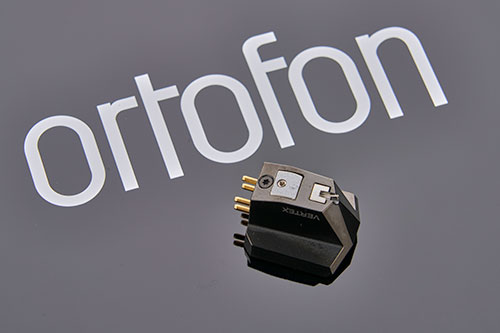
Ortofon MC Vertex
Die bisherigen Topmodelle von Ortofon, das Anna, das Anna Diamond und das Diamond, ähnelten einander auch optisch stark. Das Vertex macht schon durch sein Erscheinungsbild klar, dass es anders ist. Es ist der erste Tonabnehmer mit einem Diamanten mit Vertex-Schliff. Soweit mir bekannt, ist das der erste neue Nadelschliff seit rund 40 Jahren. Aber das ist nicht die einzige Veränderung gegenüber dem MC Diamond: Der Generator des Vertex besitzt einen deutlich höheren Innenwiderstand, die Nadelnachgiebigkeit…15.09.2026 -
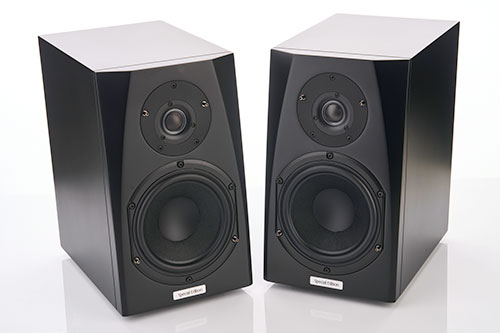
Phonar Veritas M4.2 SE
Es hat mir bislang stets Vergnügen bereitet, mich mit Phonar Lautsprechern zu beschäftigen. Nach einem Test kaufte ich die Veritas 9.2 SE und genieße seitdem ihre Musikalität. Phonar überzeugte immer wieder mit einem außergewöhnlich attraktiven Preis-Klang-Verhältnis. Bestätigt die neue, kompakte Phonar Veritas M4.2 SE diese Erfahrungen? Mein eindrucksvollstes Phonar-Erlebnis hatte ich vor zwei Jahren mit der Standbox Veritas p4.2 Next, die aktuell für einen Paarpreis von 2400 Euro auf der Phonar-Website zu sehen ist. Genau…08.09.2026 -
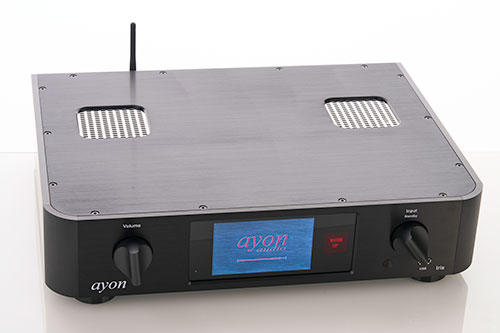
Ayon Iris Signature Streamer
Auf der High End Vienna haben Dirk Sommer und ich den Ayon Iris erstmals entdeckt – nun steht der außergewöhnliche Streaming-Player bei uns bereits zum Test. So frisch ist der Iris, dass selbst die Roon-Zertifizierung zum Testzeitpunkt noch läuft. Brandneu, doch der Iris kommt keineswegs aus dem Nichts: Wer die Entwicklung der digitalen Ayon-Komponenten verfolgt hat, erkennt eine kontinuierliche Beschäftigung mit dem Thema Streaming. Auch wir konnten diesen Weg begleiten – nach dem S3 und…01.09.2026 


-
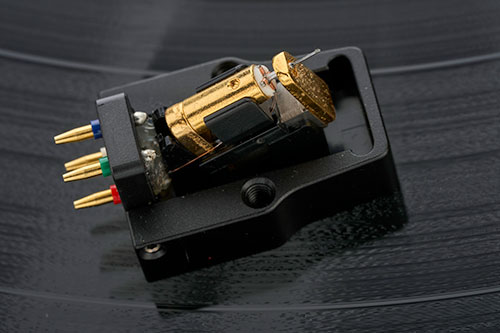
Sumiko Starling
Mein letzter Test eines Tonabnehmersystems befasste sich mit dem Sumiko Oriole. Nun drehen sich für diesen Test meine Schallplatten unter dem Sumiko Starling, dem teuersten System aus der Sumiko Referenz Serie. Nachdem ich überaus positiv überrascht vom Test des Oriole war und dies Peter Laitenberger vom deutschen ATR Vertrieb mitteilte, empfahl mir dieser mir doch einmal das Sumiko Starling anzuhören. Gesagt, getan und bereits wenige Tage später kam das kleine Päckchen mit dem Starling zu…28.08.2026 -
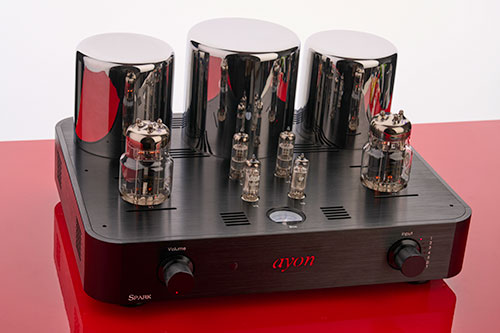
Ayon Spark V
Der Röhrenvollverstärker Spark ist mittlerweile seit über 20 Jahren ein fester Bestandteil des Produktportfolios von Ayon. Preislich eher im Einstiegssegment der Österreicher und nominell unterhalb der Evolution-Serie angesiedelt, hat dieses Gerät aufgrund der eingesetzten russischen Triode 6C33 das Potenzial zum Hidden Champion. Spätestens seit meinem Test des Boliden Ayon Crossfire Evo maße ich mir an, ein Kenner der Marke Ayon zu sein, zumal mir diverse andere Geräte der Marke im Laufe der Jahre zu Gehör…25.08.2026 -
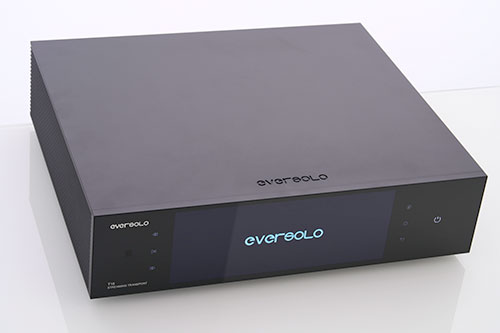
Eversolo T10
Eversolos Streamer DMP-A10 beeindruckte mit seinem hervorragenden Preis/Leistungsverhältnis und seiner prallen Ausstattungsfülle. Aber in meiner Kette im Wohnzimmer mit M-Scaler und HUGO 2 arbeitet er nur als reiner Datenlieferant. Kann das Eversolos neuer Streaming Transport T10 noch besser? Zumindest nach dem ersten Blick auf das rückseitige Anschlussfeld darf man das vermuten, denn dort befinden sich wie beim Eversolo DAC-Z10 zwei BNC-Anschlüsse für die Verbindung mit einer externen Clock, entweder mit einer Impedanz von 75 oder…21.08.2026
© 2026 | HIFISTATEMENT | netmagazine | Alle Rechte vorbehalten | Impressum | Datenschutz


Einige Hifistatement-Autoren benutzen
Qobuz Sublime+ Abonnements.

Einige Hifistatement-Autoren besitzen
eine roon Mitgliedschaft.

Einige Hifistatement-Autoren besitzen
die JPLAY hi-fi app.

Einige Hifistatement-Autoren besitzen
den Audirvana Plus 3 Music Player.