


 |
For me, the outstanding feature of the X1t is its exceptionally high intelligibility of human voices, which establishes a special bond with the listener. This commences with the fact that the X1t carves out the characteristic features of each individual voice with captivating clarity. Let's take a listen into the opera "Carmen" (Bizet: Carmen - Herbert Von Karajan / Vienna Philharmonic - The RCA Opera Treasury 74321 39495 2): on the one hand, we have the wonderful Leontyne Price, whose dark, smoky timbre is perfectly suited to the role of the fiery Carmen, and on the other, there is Mirella Freni, who performs the role of Micaela in a crystal-clear, intense and beguiling manner. The X1t reproduces these very different voices phenomenally well. But this holds not only true for voices in the classical field. Just as impressive is how the X1t brings out the differences in the voices of Holly Cole, Amanda Martinez or Jill Barber in the sampler Jazz Ballads (Jazz Ballads - 2xHD 24/44.1), with the singers standing exactly between the speakers at all times. In addition, there is an amazing ability to resolve complex choral passages. Thus, in the famous opening "O Fortuna" from Carl Orff's Carmina Burana (Carmina Burana - Seiji Ozawa / Boston Symphony Orchestra), the X1t conveys just the right sense of implacability and a palpable hint of menace with the fresh-sounding and literal chorus. This ability to reveal even the finest details within the midrange also benefits the reproduction of acoustic instruments in a special way. It's captivating how in "Galicia Flamenco" with Gino D' Auri (Flamenco Passion - FIM XRCD) small details such as the creaking of the cello or a tap on its body are exposed by bestowing the whole presentation that certain something.

I was also impressed by how harmoniously the highs can follow up with this outstandingly performing midrange. In the "Divertimento K. 136" by W.A. Mozart in the recording with the Academy of St. Martin in the Fields conducted by Neville Marinner (FIM Supersounds! II), the sound of the strings is soft, fluent and brilliant, but entirely free of any signs of harshness. The music flows with great harmony in all registers. At the other end of the frequency spectrum, the X1t - not really surprisingly - has its clear limits. Below about 70 Hertz, the frequency response drops rapidly. True lows are not possible here, but anyone who opts for a mini monitor like the X1t should in fact be aware of these limitations. More important is what happens in the frequency areas above that. And what the X1t is able to deliver here sounds clean and crisp. Dee Dee Bridgewater in "Memphis...Yes, I'm Ready" can rely on a solid tonal foundation. Only at very high volume - far above my normal listening level - or with music involving extreme low frequencies, the small midwoofer starts to limit audibly. In addition to the excellent tonal qualities, the sound is completely detached from the speakers at any time and has a great spatial depth that goes far beyond what one would generally expect from such a small transducer. When playing the excellent recording of "El Baile De Luis Alonso" by Giminez (Music of Spain - Rafael Fruhbeck De Burgos Conducts the National Orchestra of Spain - HDTT 24/192), the sound reaches far into the depth of an imaginary space, but remains clearly structured and transparent, while the speakers "disappear" completely. The soundstage created by these tiny monitors in this recording is astonishing.

Concerning my enthusiasm, you will rightly ask at this point where the differences lie in comparison to the much more expensive Raidho TD1.2. For me, one of the main differences is that the X1t shares their fascinating "edge definition" when it comes to the rendering of voices or instruments, which does not allow anything to fade or appear slightly out of focus. But in the end it lacks somewhat a bit of the "third dimension", which lets voices or instruments stand out so sharply drawn from the background that you think they are physically standing in front of you. In addition, the X1t's charm and melodiousness of the high frequencies is not fully carried over into the mid-range. It's not a matter of the mids being overcooled, but I miss a tad of emotionality here. With orchestral music, especially in tutti passages, the virtual soundstage doesn't extend quite as far into the virtual depth, and this may have something to do with the limits in the low frequency range, especially at higher volumes. Please don't get me wrong: At this point, we are talking about differences at the highest level compared to an absolute top speaker - also in terms of price. But the longer I listen to music through the X1t, the more fascinated I get. Although the X1t entails the limitations I just described in the bass range and misses the ability to play loud without effort, it delivers a sound quality especially in the mid- and high-frequency range that is simply outstanding. My experience with the power source, i.e. the connected amplifier, also fits quite well at this point. With my Omtec CA 25, which delivers about 25 watts per channel in pure Class A operation, the X1t runs comfortably. I was a little surprised, however, when I swapped to a newly restored Stax DA-80M, which provides about 80 watts per channel in Class A mode. The extra power leads to a more spacious sound in all dimensions and to a more powerful bass than I had expected. The increase in authority and sovereignty simply cannot be ignored. As far as the selection of amplifiers is concerned, the X1t is more demanding than it might seem at first glance.


-
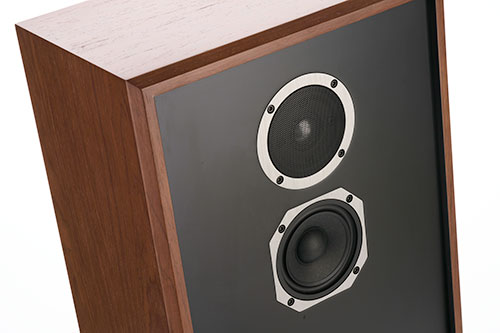
KLH Audio Model Four
Endlich steht mal etwas ganz anderes in meinem Hörraum. Der Lautsprecher des traditionsreichen amerikanischen Herstellers KLH entspricht einem Design von vor mehr als 50 Jahren, wie man es auch heutzutage bei Edelmarken wie Harbeth oder Audio Note findet. Bislang hatte ich nicht das Vergnügen, einen solchen Lautsprecher im Hörraum zu erleben. Neben dem Design mit breiter Schallwand und geringer Bautiefe macht der Paarpreis von knapp 2000 Euro die KLH Model Four hochgradig interessant. Auf zum…19.10.2026 -
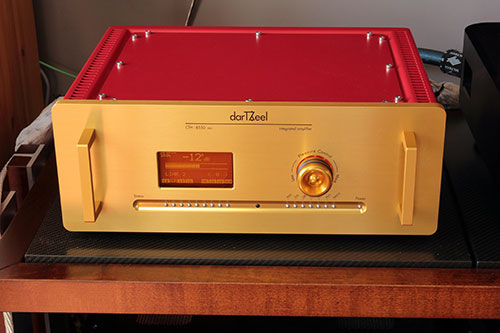

darTZeel Audio CTH-8550 Mk II
darTZeel ist ein Schweizer Unternehmen, das 2001 in Genf von Hervé Delétraz gegründet wurde. Der Name ist ein Anagramm des Nachnamens Delétraz. Die Arbeit an den ersten Geräten begann bereits 1984 im Rahmen einer Diplomarbeit, und nach 18 Jahren Forschung wurde 2002 der Leistungsverstärker NHB-108 offiziell vorgestellt. Es gibt Marken, auf die man viele Jahre warten muss, aber man wartet trotzdem weiter. So war es für mich bei der Marke darTZeel. Zufällig traf ich ihren…13.10.2026 -
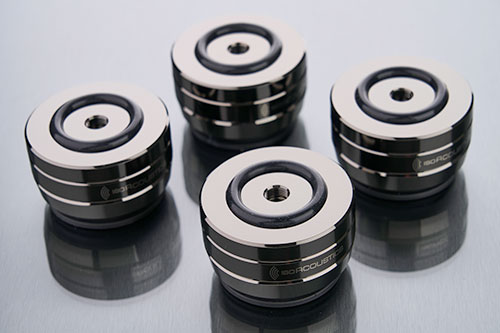
IsoAcoustics GAIA Neo I
Erinnern Sie sich noch? Es ist bereits eine ganze Weile her, da haben Hifi-Fans ihre Lautsprecher auf Tennisbälle gestellt, um einen besseren Klang aus ihnen herauszukitzeln. Oder sie haben abenteuerliche Selfmade-Konstruktionen gebastelt, auf denen die vielleicht nicht ganz highendigen Schallwandler platziert wurden. Das ist lange her und in der Zwischenzeit hat sich in Sachen Lautsprecher-Füße einiges getan. Es gibt eine große Zahl an Herstellern, die Basen, Spikes oder Ständer mit unterschiedlichen Konzepten und Materialien produzieren,…09.10.2026 


-
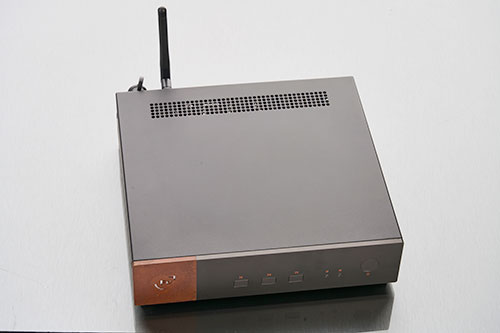
Ferrum BROEN
Auf der High End 2025 ließ man bei Ferrum durchblicken, dass an einem Streamer gearbeitet wird. Die Ferrum Streaming Control Technology, mit der die Musikwiedergabe mittels der Fernbedienung Ferrums DAC WANDLA steuerbar ist, war bereits eine Vorbereitung auf den Streamer und das Schaffen eines gesamten Ferrum-Ökosystems. Im Oktober 2025, wenige Monate nach der High End letzten Jahres waren auf der Audio Video Show in Warschau dann bereits erste BROEN Vorserienmodelle in Betrieb. Auf der diesjährige…06.10.2026 -
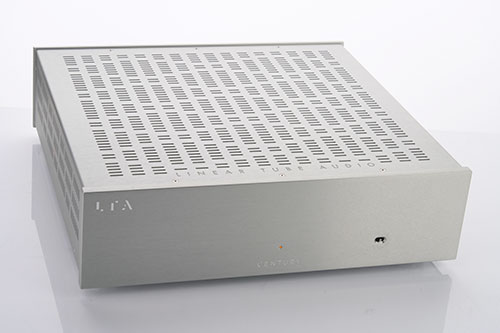
Linear Tube Audio Century
Century heißen die Röhren-Mono-Endverstärker von Linear Tube Audio, die ohne Ausgangsübertrager auskommen und sich dennoch grundlegend von anderen OTL-Konzepten unterscheiden. Wir haben uns intensiv damit beschäftigt, was die patentierte ZOTL-Technologie des Entwicklers so besonders macht und wie sie sich klanglich auswirkt. Für diesen Test haben Dirk Sommer und ich uns eine Arbeitsteilung vorgenommen, bei der ich (Carsten Bussler) mich auf die Technik der Century-Monos sowie die Hintergründe zu Linear Tube Audio und die Zusammenarbeit mit…29.09.2026 -
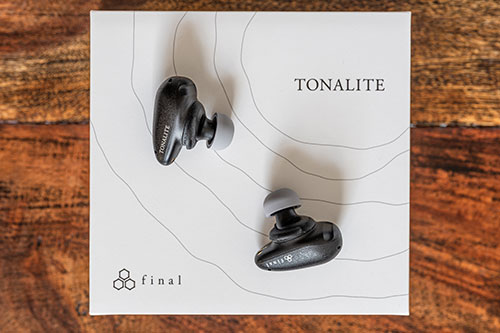
Final Tonalite
Finals Tonalite ist nicht nur ein neuer In-Ear, sondern macht gleichzeitig Finals Timbreanpassung jedem Nutzer mittels einer App zugänglich. Seit der noch etwas kryptischen Ankündigung dieser Technologie auf der High End 2022 habe ich Ihnen über den Entwicklungsprozess berichtet. Das fertige Produkt halte ich persönlich für einen Meilenstein. Tonalite ist eine grundlegende Neuentwicklung mit neuem Formfaktor und neuer Technik. Die Tonalite In-Ears verfügen über eine eher ovale Form, in der die gesamte Elektronik untergebracht ist.…25.09.2026
© 2026 | HIFISTATEMENT | netmagazine | Alle Rechte vorbehalten | Impressum | Datenschutz


Einige Hifistatement-Autoren benutzen
Qobuz Sublime+ Abonnements.

Einige Hifistatement-Autoren besitzen
eine roon Mitgliedschaft.

Einige Hifistatement-Autoren besitzen
die JPLAY hi-fi app.

Einige Hifistatement-Autoren besitzen
den Audirvana Plus 3 Music Player.